15/03/2024
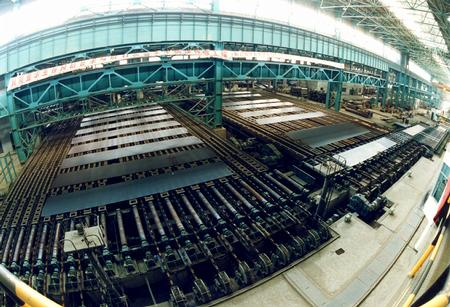
Break the Record Again! Anyang Base Steckel Coil Unit Successfully Rolled 4.0x2500mm Ultra-Limit Thin Specification Plate
Anyang Base Steckel Coil Unit successfully rolled 4.0x2500mm ultra-limit thin specification plate.
Read More
Flange selection is a systematic engineering decision-making process that requires careful consideration of operating parameters, standards and specifications, and material compatibility. Standardized procurement and selection processes can avoid assembly errors and safety hazards.
1. Define the basic parameters and confirm the nominal dimensions. Accurate data needs to be obtained from the design documents to match the diameter of the connected pipes or equipment. At the same time, the additional forces or bending moments caused by the pipeline's own weight, thermal expansion, earthquakes, etc. must be considered. These factors will complicate the flange design, and if necessary, the pipe load should be converted into equivalent pressure for selection.
2. Select a flange standard system. The standard system determines the flange size, pressure rating, and marking method. Select the appropriate rating (e.g., Class 75, 150, 300, 400, 600, or 900) based on actual temperature and pressure conditions. If the project involves the American standard system, then ASME B16.5 should be referred to.
3. Confirm the flange type. Select weld neck flanges for pipe connections and blind flanges for end sealing and isolation. The flange type mainly depends on the pressure rating, pipe size, and operating conditions. For specific selection, please refer to the Complete List and Selection Reference of Industrial Pipe Fittings.
4. Confirm the flange material. The flange material must be compatible with the pipe material, medium, and design temperature.
5. Confirm sealing and connection requirements. Determine the flange end face (RF/FF/RTJ), gasket type, and bolt configuration; verify the availability of the selected NPS, grade, and series of RTJ.
6. Select matching bolts and gaskets. Match materials to the medium, temperature, and corrosion conditions.
When selecting a flange, ensure that its strength rating matches the pipeline and strictly verify the rated values according to the design temperature and pressure.
Chemical composition and mechanical properties of wear-resistant steel plates
C: Improves hardness and wear resistance, but too much carbon will reduce toughness and weldability.
Mn: Improves hardenability and strength, and aids in wear resistance.
Cr, Mo, Ni: improve hardenability, enabling thick plates to achieve high hardness.
P and S: harmful impurities; the lower the better, especially affecting toughness and weldability.
Rust spots on stainless steel are usually caused by contamination from carbon steel particles, salt exposure, moisture, or damage to the protective passive layer—not necessarily because the stainless steel itself is failing.
To remove rust spots:
Clean the area with warm water and a mild detergent.
Use a non-abrasive stainless steel cleaner or a baking soda paste.
For stubborn stains, apply a dedicated stainless steel rust remover according to the manufacturer's instructions.
Rinse thoroughly with clean water.
Dry the surface completely with a clean cloth.
Avoid using steel wool or ordinary steel brushes, as they can leave iron particles behind and cause additional rust staining.
If the rust is only on the surface, cleaning is usually enough to restore the appearance of the stainless steel. In more severe cases, re-passivation may be required to restore the material's corrosion resistance.
High-quality stainless steel products from manufacturers such as Ratanakar Wire Private Limited offer excellent corrosion resistance, but regular cleaning and maintenance are still important for long-term performance.
In most cases, rust spots on stainless steel are a surface issue and can be removed successfully with proper cleaning and care.
China Steel Market
Empowering small and medium-scale steel purchasing
Hot search words:
China Rebar prices China Wire Rod Prices Welded Steel Pipe Prices